AI-Powered Narrative Control: Strategic Messaging for Winning Any Elective Seat
Advanced guide to using AI and data analytics for strategic narrative control and message discipline across all campaign communications channels.
Introduction
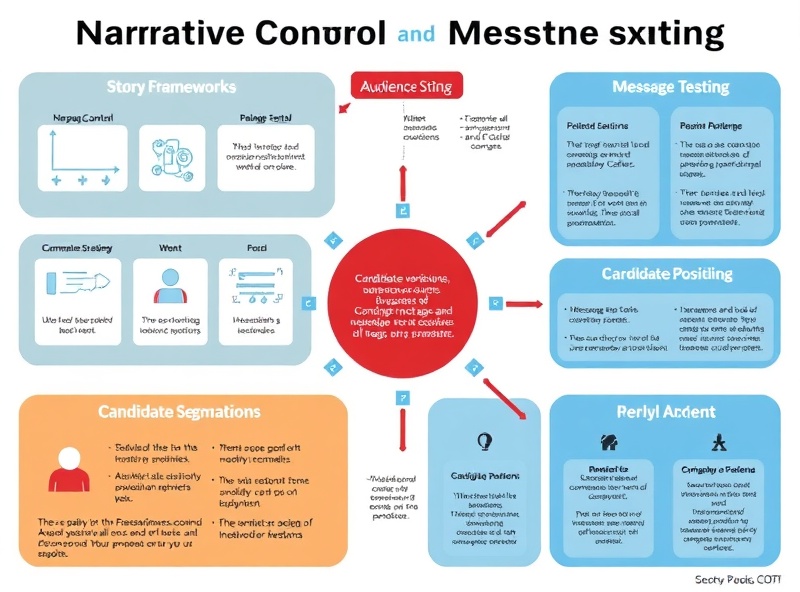
Narrative control—the ability to define how voters perceive you, your opponent, and the election itself—is one of the most powerful forces in politics. Campaigns that dominate the narrative narrative consistently win, while campaigns that are defined by opponent messaging or external events struggle. Modern AI and data analytics enable unprecedented levels of narrative precision and message targeting. This guide outlines how to build a narrative control strategy using AI to win any elective seat.
1. Understanding Narrative Control in Modern Campaigns
What is Political Narrative?
Political narrative defined:
- The story voters tell themselves about who you are
- How voters understand your key strengths and weaknesses
- How voters compare you to your opponent
- How voters perceive the stakes and importance of the election
- The emotional and rational reasons to vote for you
Narrative vs. message:
- Message is what you say (specific communications)
- Narrative is what voters believe (the overarching story)
- Many messages contribute to one narrative
- Consistent messaging over time builds narrative
- Voter emotions and beliefs matter more than specific facts
Narrative Control Advantages
Campaigns with strong narrative:
- Are perceived as frontrunners and winners
- Control media coverage and agenda
- Force opponents into reactive positions
- Build voter confidence and enthusiasm
- Withstand attacks and controversies
- Convert undecided voters at higher rates
Campaigns losing narrative war:
- Are perceived as weak or trailing
- Spend time defending against attacks
- Cannot control their own message
- Lose voter confidence
- Struggle to close with undecided voters
- Lose despite having strong policy positions
2. Building Your Core Narrative
Narrative Development Process
Step 1: Understand your candidate
- Core values and authentic beliefs
- Real accomplishments and track record
- Personal story and background
- Strengths and weaknesses
- Long-term political vision
Step 2: Understand the electorate
- Key voter concerns and priorities
- How voters perceive key issues
- Voter values and worldview
- What voters are looking for in a leader
- Voter frustrations and aspirations
Step 3: Understand the opponent
- Opponent’s likely narrative
- Opponent strengths and vulnerabilities
- Contrast opportunities
- Where you differ clearly from opponent
- Opponent attack vectors against you
Step 4: Develop contrast narrative
- Why you’re better positioned to deliver
- How your values differ from opponent
- What you offer that opponent doesn’t
- Why you deserve to win
- What’s at stake for voters
Step 5: Distill into simple narrative
- Core narrative should be 2-3 sentences
- Emotionally resonant for target voters
- Authentic to candidate and positions
- Differentiating from opponent
- Memorable and repeatable
Core Narrative Examples
Reform/Change Narrative: “[Candidate] is a proven reformer bringing fresh leadership to [office]. Unlike career politicians, [he/she] has a track record of delivering results and standing up for ordinary people. It’s time for new leadership that puts voters first, not politicians.”
Competence/Effectiveness Narrative: “[Candidate] has the experience and skills to handle [key issue]. While others talk, [candidate] delivers results. [He/She] has proven [specific accomplishments]. We need proven leadership for [key challenge].”
Values/Alignment Narrative: “[Candidate] shares our values of [values]. Unlike [opponent] who represents [opposing values], [candidate] will fight for what matters to us. This election is about who will truly represent our values and interests.”
3. AI-Powered Message Development and Testing
AI Message Generation
Natural language processing for messaging:
- Generate multiple message variations on core theme
- Optimize messaging for different audiences
- Test different emotional appeals and framings
- Create variations for different channels and formats
- Generate talking points and soundbites
AI-powered testing and optimization:
- A/B test message variations in real-time
- Measure which messages drive voter response
- Identify most persuasive messaging by demographic
- Identify messaging that creates strongest emotional response
- Continuously test and optimize throughout campaign
Message testing workflow:
- Develop core message theme
- Generate 10-20 message variations
- A/B test via polling and social media
- Analyze results by demographic and message
- Identify top-performing variations
- Deploy winning messages broadly
- Continue testing variations of winners
Demographic-Specific Messaging
Segment-specific narrative variations:
For swing voters:
- Focus on competence and track record
- Emphasize objectivity and pragmatism
- Minimize partisan rhetoric
- Highlight delivering for all voters
- Emphasize problem-solving
For base voters:
- Focus on values alignment
- Emphasize contrasts with opponent
- Use more passionate and emotional language
- Highlight fighting for voter priorities
- Build enthusiasm and turnout
For persuadable opposition voters:
- Focus on opponent weaknesses
- Highlight cross-over appeal
- Emphasize specific policy differences
- Use trusted messengers from their community
- Minimize partisan attacks
For community-specific groups:
- Tailor messages to specific community concerns
- Use community leaders and trusted messengers
- Reference community history and context
- Highlight candidate’s connection to community
- Show understanding of unique challenges
4. Multi-Channel Narrative Deployment
Earned Media Strategy
Media narrative management:
- Generate newsworthy campaign announcements
- Proactively pitch stories to journalists
- Respond quickly to breaking news
- Dominate news cycle with campaign-driven stories
- Define how media covers campaign
Interview and debate strategy:
- Prepare candidate with core message
- Practice message discipline and talking points
- Deflect hostile questions back to message
- Use questions as springboards to message
- Stay on message despite journalist efforts
Media monitoring and response:
- Monitor all media coverage in real-time
- Identify inaccurate or negative coverage
- Rapid response to false claims
- Coordinate response with campaign messaging
- Leverage social media for rapid response
Paid Media Strategy
Advertising narrative consistency:
- All ads reinforce core narrative
- Paid media amplifies most successful messages
- Targeted to specific demographic with tailored message
- Consistent visual and verbal branding
- Frequency and reach to build narrative
Digital advertising narrative:
- Social media ads with targeted messages
- Video ads telling candidate story
- Pre-roll ads during news and political content
- Search ads for voters actively considering candidate
- Display and retargeting ads for frequency
Traditional media narrative:
- Radio spots delivering key message
- TV ads telling candidate story
- Print ads in target publications
- Out-of-home advertising in key areas
- Billboards with core message
Grassroots and Peer Narrative
Volunteer messaging and talking points:
- Equip volunteers with key messages
- Train volunteers on message delivery
- Provide talking points for voter conversations
- Empower volunteers to tell candidate story
- Reinforces narrative through peer conversation
Community messenger strategy:
- Identify trusted messengers in target communities
- Brief messengers on narrative and talking points
- Empower messengers to promote narrative in community
- Leverage community trust and credibility
- Extend reach beyond formal campaign
Event and rally messaging:
- Candidate speeches deliver core message
- Supporting speakers reinforce narrative
- Crowd and supporter testimonials
- Visual staging and production reinforce message
- Social media amplification of event highlights
5. Narrative Discipline and Consistency
Message Discipline
Maintaining message consistency:
- All campaign communications on message
- Every interview stays on core narrative
- Surrogates and supporters on same page
- Materials and ads reinforce core message
- No off-message statements or tangents
Message discipline enforcement:
- Daily message briefing for candidate and surrogates
- Talking points distributed to all speakers
- Training on message delivery
- Rapid correction of off-message statements
- Centralized approval of major communications
Responding to attacks while maintaining message:
- Don’t get knocked off message by attacks
- Respond to attacks briefly and credibly
- Pivot back to core positive message
- Let response tie to broader narrative
- Avoid extended back-and-forth on attacker’s terms
Brand and Visual Narrative
Consistent visual branding:
- Campaign colors, logo, typography consistency
- Visual design reinforces candidate identity
- Professional production quality
- Consistent imagery and aesthetic
- Builds recognition and recall
Candidate personal narrative:
- Consistent candidate appearance and demeanor
- Authentic to candidate personality
- Appropriate for office and audience
- Professional but relatable
- Consistent across all channels
6. Opposition Narrative and Counter-Messaging
Opposition Research and Narrative
Understanding opponent narrative:
- Identify opponent’s core message
- Understand opponent’s perceived strengths
- Understand opponent’s narrative strategy
- Identify potential attacks against you
- Prepare counter-messaging
Developing contrast narrative:
- Clearly differentiate your narrative from opponent
- Identify specific areas of disagreement
- Highlight your strengths where opponent is weak
- Show why you’re better choice
- Use opponent’s narrative against them if possible
Rapid Response to Opposition Attacks
Attack monitoring and response:
- Monitor opponent statements and ads
- Identify false claims and misrepresentations
- Prepare fact-checks and refutations
- Rapid response with accurate information
- Use response as opportunity to reinforce positive narrative
Response strategy:
- Fact-check false claims with evidence
- Explain context and accurate information
- Pivot to positive candidate narrative
- Use attack to reinforce contrast
- Keep response simple and credible
Inoculation Strategy
Pre-emptive messaging:
- Anticipate likely opponent attacks
- Proactively address in your messaging
- Take issue off table before opponent uses it
- Show you’re not hiding or defensive
- Prevent attack from gaining traction
7. Narrative Analytics and Measurement
Measuring Narrative Penetration
Voter perception tracking:
- Survey voters on how they perceive candidate
- Track perception changes over campaign
- Measure belief in core narrative elements
- Compare to opponent narrative penetration
- Assess narrative success vs. objectives
Sentiment analysis:
- Monitor social media sentiment about campaign
- Track emotional tone of coverage
- Identify narrative resonance by demographic
- Monitor shift in sentiment over time
- Assess impact of major events
Narrative strength metrics:
- How many voters can articulate your narrative
- How many voters prioritize your message issues
- Believability of candidate positioning
- Preference for your candidate based on narrative
- Likelihood to vote based on narrative
Media Coverage Analysis
Earned media measurement:
- Track media mentions and story counts
- Analyze tone of coverage (positive/negative/neutral)
- Measure narrative alignment of coverage
- Track most-mentioned issues and themes
- Assess media effectiveness
Message prominence:
- Track which messages appear most in coverage
- Measure consistency of message delivery
- Identify successful narrative moments
- Track viral moments and amplification
- Measure media pickup of campaign themes
8. Narrative Pivots and Adaptation
When to Adapt Narrative
Adapting based on performance:
- If narrative not resonating, evolve messaging
- If demographic not responding, adjust appeal
- If new issues emerge, incorporate into narrative
- If opponent changes strategy, respond strategically
- If events change campaign environment, adapt
Avoiding narrative drift:
- Core narrative stays consistent
- Adapt messaging and emphasis, not core story
- Evolution should feel natural, not desperate
- Maintain authenticity and consistency
- Build on narrative, don’t contradict it
Crisis Narrative Management
Responding to candidate crisis:
- Acknowledge issue transparently
- Take responsibility and show corrective action
- Explain in context of core values/character
- Demonstrate this doesn’t change core narrative
- Return to positive narrative quickly
External crisis response:
- Respond to major news events and crises
- Position candidate leadership on issue
- Connect to core narrative if possible
- Show empathy and understanding
- Pivot back to campaign narrative
9. Best Practices for Narrative Dominance
- Simplicity - Core narrative should be clear and memorable
- Authenticity - Narrative must be true to candidate
- Consistency - Same message across all channels and time
- Repetition - Repeat core message multiple times (7-10 times for penetration)
- Emotion - Tap into voter emotions, not just logic
- Testing - Test messages and optimize based on response
- Flexibility - Adapt tactics while maintaining core narrative
- Discipline - Keep candidate and all surrogates on message
- Speed - Respond rapidly to attacks and opportunities
- Integration - All campaign elements reinforce narrative
Conclusion
AI-powered narrative control enables unprecedented sophistication in message development, testing, targeting, and optimization. Campaigns that effectively use AI and data analytics to build, test, and deploy consistent, compelling narratives win more often and by larger margins than those using traditional approaches.
Narrative control is not about manipulation or deception—it’s about defining yourself and your candidacy on your terms before opponents define you on theirs. A clear, authentic, compelling narrative that resonates with voters across multiple channels is one of the most powerful forces in politics.
The framework outlined here provides the foundation for building a narrative control strategy that works across any office—from local MCA races to presidential campaigns. Adapt it to your specific candidate, office, and electorate, but the underlying principles of consistency, authenticity, testing, and discipline remain critical to narrative success.
About the Author
Campaignmaster Team is part of the Campaignmaster team dedicated to helping campaigns succeed in Kenya's competitive political environment.
← Back to all articlesReady to Apply These Insights?
Let's discuss how Campaignmaster OS can help you implement these strategies for your campaign.