Political Data Analytics in Kenya: Turning Voter Data into Campaign Intelligence
Comprehensive guide to using data analytics in Kenyan political campaigns, from voter segmentation and targeting to predictive modeling and performance measurement.
Introduction
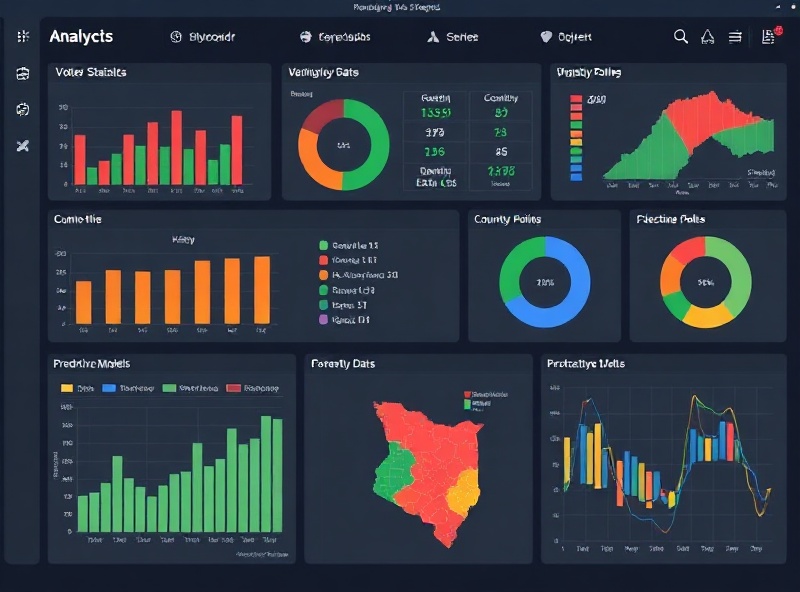
Data analytics has become the foundation of modern political campaigns. The campaigns that win are those that understand their voters deeply, target persuasion efforts efficiently, and measure campaign effectiveness accurately. This guide outlines how to build a data-driven campaign using political analytics in the Kenyan context.
1. Political Data Sources in Kenya
Electoral and Demographic Data
IEBC Data:
- Voter registration data (with demographic information)
- Polling station locations and boundaries
- Historical election results by precinct and constituency
- Updated daily during election season
Census and Government Data:
- County demographic data (from national census)
- Occupational and educational statistics
- Infrastructure and service access data
- Economic and employment data by region
Third-party Data:
- Mobile operator coverage and usage data
- Financial services and banking data
- Educational institution data
- Business and commercial data
Campaign-Generated Data
First-party campaign data:
- Voter contact records from field operations
- Event attendance and participation
- Digital engagement (website visits, social media interactions)
- Volunteer activity and mobilization metrics
- Donor information and contribution history
- Survey and polling responses
Data collection methods:
- Field canvassing tablets recording interactions
- Website form submissions and tracking
- Social media analytics from platforms
- Email open and click rates
- SMS engagement metrics
- Event sign-up and attendance data
Data Integration and Management
Building a unified voter database:
- Integrate IEBC voter registration with demographic overlays
- Layer in campaign-generated data from field operations
- Add digital engagement data from website and social media
- Combine with census and third-party data
- Create unique voter identifiers for record-matching
- Clean and deduplicate records across data sources
Data quality assurance:
- Regular validation checks for accuracy
- Duplicate detection and merging
- Standardized data entry formats
- Regular audits of data quality
- Version control and data lineage tracking
2. Voter Segmentation and Targeting
Geographic Segmentation
Constituency and ward-level analysis:
- Analyze voting patterns by constituency and sub-county
- Identify competitive vs. safe constituencies
- Compare voter turnout rates across regions
- Assess geographic concentration of demographic groups
- Prioritize field operations based on competitiveness
Precinct-level targeting:
- Map high-density voter areas
- Identify swing precincts and priority neighborhoods
- Determine optimal field operation locations
- Plan event venues for maximum impact
- Allocate campaign resources efficiently
Demographic Segmentation
Key demographic variables:
- Age groups (youth, working age, elderly)
- Gender (women voters, men voters, LGBTQ+ communities)
- Occupational categories (farmers, traders, professionals, students)
- Educational levels (primary, secondary, tertiary)
- Economic status (income levels, employment status)
- Community/ethnic affiliations
Demographic analysis applications:
- Identify which demographics support which issues
- Customize messaging by demographic group
- Prioritize outreach to persuadable demographics
- Understand demographic turnout patterns
- Target underrepresented voters
Behavioral and Psychographic Segmentation
Voter behavior patterns:
- Historical voting patterns and loyalty
- Issue priority ranking
- Social media engagement patterns
- News consumption preferences
- Community activity and leadership
- Charitable and community giving
Psychographic characteristics:
- Political ideology (progressive, conservative, centrist)
- Trust in institutions and media
- Openness to new candidates and ideas
- Primary information sources
- Community influence and opinion leadership
- Risk tolerance and change orientation
Sophisticated Predictive Segmentation
Propensity modeling:
- Predict likelihood voter will support candidate
- Identify persuadable voters vs. committed
- Score voters on persuadability
- Identify opposition voters with cross-over potential
- Rank voters by influence and importance
Lookalike modeling:
- Create profiles of core supporters
- Find similar voters (“lookalike” audiences)
- Expand audience beyond original support base
- Discover untapped demographic opportunities
- Improve targeting efficiency
3. Voter Targeting Strategies
High-Priority Targeting Groups
Swing voters:
- Definition: Likely to vote for either candidate
- Identification: Cross-voting history or no clear preference
- Messaging: Issue-focused, contrast with opponent
- Frequency: High-intensity contact (weekly or more)
- Channels: Personal field contact, targeted digital ads
Persuadable voters:
- Definition: Leaning toward opponent but could switch
- Identification: Demographic or issue alignment signals
- Messaging: Highlight competitor weaknesses, your strengths
- Frequency: Regular contact (bi-weekly)
- Channels: Trusted messengers, peer-to-peer communication
Base voters:
- Definition: Strong existing support
- Identification: History of voting your direction, issue alignment
- Messaging: GOTV (Get Out The Vote), mobilization
- Frequency: Lower frequency but higher intensity near election
- Channels: Digital reminders, volunteer mobilization
New/youth voters:
- Definition: First-time voters and young demographics
- Identification: Age-based voter registration, new registrations
- Messaging: Future-focused, innovation, change
- Frequency: Regular engagement, build relationship
- Channels: Social media, youth events, digital platforms
Granular Micro-Targeting
Ward-level targeting:
- Create voter profiles for each ward
- Identify ward-specific issues and priorities
- Customize messaging for each ward
- Deploy field teams to high-priority wards
- Measure targeting effectiveness by ward
Household-level targeting:
- Identify persuadable households
- Customize messaging within households
- Use trusted household members as messengers
- Measure household-level engagement
- Build long-term household relationships
4. Campaign Performance Measurement
Key Performance Indicators (KPIs)
Voter contact metrics:
- Door knocks per day/week
- Voter conversations and quality interactions
- Phone calls and SMS messages sent
- Event attendees and quality of engagement
- Volunteer activity hours and productivity
Digital engagement metrics:
- Website traffic and user engagement
- Social media followers and engagement rate
- Email open and click rates
- Video views and completion rates
- Digital ad impressions and click-through rates
- Lead generation and sign-ups
Persuasion and movement metrics:
- Voter opinion shift over campaign cycle
- Swing voter movement toward candidate
- Base voter activation and enthusiasm
- Opponent voter cross-over rate
- Undecided voter resolution
Election-related metrics:
- Polling averages and trend
- Voter contact vs. target
- Volunteer mobilization rate
- Event attendance vs. target
- Media mentions and coverage
- Fundraising vs. target
Performance Dashboards and Reporting
Daily tracking dashboards:
- Field operation metrics vs. target
- Digital engagement metrics
- Polling updates and trend
- Media monitoring and sentiment
- Financial tracking vs. budget
- Staff and volunteer activity
Weekly analysis and strategy meetings:
- Performance against weekly targets
- Trend analysis and movement
- Competitive positioning update
- Resource reallocation based on performance
- Strategy adjustments based on performance
Real-time alerts:
- Automated alerts when performance falls below target
- Notification of significant trend changes
- Opposition campaign activity flagged
- Emerging issues or crises requiring response
- Opportunity identification for amplification
5. Polling and Research
Survey Research Methodology
Baseline polling:
- Initial assessment of candidate position
- Opponent strengths and weaknesses
- Voter priority issues and concerns
- Demographic performance
- Message testing
Tracking polling:
- Regular measurement of candidate performance
- Monitoring voter movement over time
- Testing message effectiveness
- Assessing debate and event impact
- Election day projection
Polling frequency and timing:
- Baseline poll at campaign start
- Monthly tracking polls during campaign
- Weekly polls in final month
- Daily polls final week before election
- Exit polling on election day
Message Testing and Optimization
Message testing methodology:
- Identify core campaign messages
- Test alternative message framings
- Measure impact on voter opinion
- Identify most persuasive messages
- Test by demographic subgroup
Iterative message optimization:
- Deploy most effective messages widely
- Continue testing variations
- Update messages based on changing landscape
- Adjust by region and demographic
- Measure message fatigue and effectiveness decay
6. Predictive Analytics and Forecasting
Vote Share Prediction
Predictive modeling approach:
- Historical voting data as base model
- Demographic factors and turnout assumptions
- Campaign intensity and resource allocation
- Polling data and trend
- Social media sentiment and engagement
- Fundraising and resource availability
Model accuracy:
- Baseline model typically 70-80% accurate 6 months out
- Accuracy improves to 85-90% 2-3 months before election
- Final week polling can achieve 90%+ accuracy
- Constituency-level predictions are less accurate than national
- Accuracy depends on data quality and assumptions
Scenario modeling:
- Model different campaign strategy scenarios
- Forecast impact of major events or messages
- Assess risk of different strategic choices
- Identify most effective resource allocation
- Prepare for multiple potential outcomes
Voter Turnout Forecasting
Turnout prediction:
- Historical turnout by constituency and demographic
- Current voter engagement and enthusiasm
- Campaign intensity and GOTV investment
- External factors affecting turnout (weather, competing events)
- Adjust for special circumstances (local issues, candidates)
Applications:
- Determine resource allocation for GOTV
- Forecast impact of different turnout scenarios
- Identify at-risk voter segments for special GOTV
- Plan election day operations and staff allocation
- Prepare contingency plans
7. Competitive Analysis and Opposition Research
Opponent Performance Tracking
Opposition voter support:
- Estimate opponent vote share by constituency
- Track opponent voter movement over time
- Identify opponent swing voters
- Assess opponent campaign intensity
- Monitor opponent media and messaging
Opposition campaign monitoring:
- Track opponent events and activities
- Monitor opponent digital presence and engagement
- Analyze opponent messaging and tone
- Identify opponent vulnerabilities and weaknesses
- Prepare counter-messaging
8. Data-Driven Resource Allocation
Budget Optimization
Resource allocation framework:
- Calculate return on investment (ROI) by activity
- Identify most cost-effective outreach channels
- Allocate budget to highest-ROI activities
- Measure marginal impact of additional spending
- Reallocate dynamically based on performance
Channel comparison:
- Field operations: $2-5 per voter contact
- Digital advertising: $0.50-2 per impression
- Media advertising: $1000-10000 per impression
- Events: $5-50 per attendee
- Direct mail: $0.50-2 per piece
Dynamic Resource Reallocation
Weekly reallocation process:
- Measure performance of each activity
- Identify underperforming activities
- Reallocate budget toward high performers
- Test new approaches in limited areas
- Scale successful tactics
9. Data Security and Privacy
Voter Data Protection
Data security practices:
- Encrypted storage of voter data
- Limited access to sensitive information
- Secure transmission of voter records
- Regular security audits
- Incident response procedures
Privacy and compliance:
- Transparent data collection practices
- Voter notice and consent
- Compliance with data protection laws
- Limited data retention after campaign
- Voter data deletion or secure destruction
Best Practices for Political Data Analytics
- Quality first - High-quality data is foundation of everything
- Integration - Combine multiple data sources for complete picture
- Privacy - Protect voter data and respect privacy
- Measurement - Track everything, measure impact
- Iteration - Continuously optimize based on performance data
- Transparency - Be honest about data limitations
- Human insight - Data informs but doesn’t replace strategy
- Real-time action - Act quickly on insights before they become outdated
Conclusion
Political data analytics transforms campaigns from intuition-based to evidence-based decision-making. Candidates and campaigns that effectively leverage voter data for targeting, persuasion, and measurement gain significant competitive advantage. The framework outlined here provides the foundation for building a data-driven campaign that maximizes efficiency, improves effectiveness, and delivers better electoral outcomes.
In the Kenyan political context, where geographic and demographic diversity is high, data-driven targeting and optimization becomes even more critical for winning. Campaigns that invest in robust data infrastructure and analytics capabilities will significantly outperform those relying on traditional approaches.
About the Author
Campaignmaster Team is part of the Campaignmaster team dedicated to helping campaigns succeed in Kenya's competitive political environment.
← Back to all articlesReady to Apply These Insights?
Let's discuss how Campaignmaster OS can help you implement these strategies for your campaign.